On this page, you will learn exactly what the domain of Empathy refers to in Bar-On’s model of emotional intelligence.
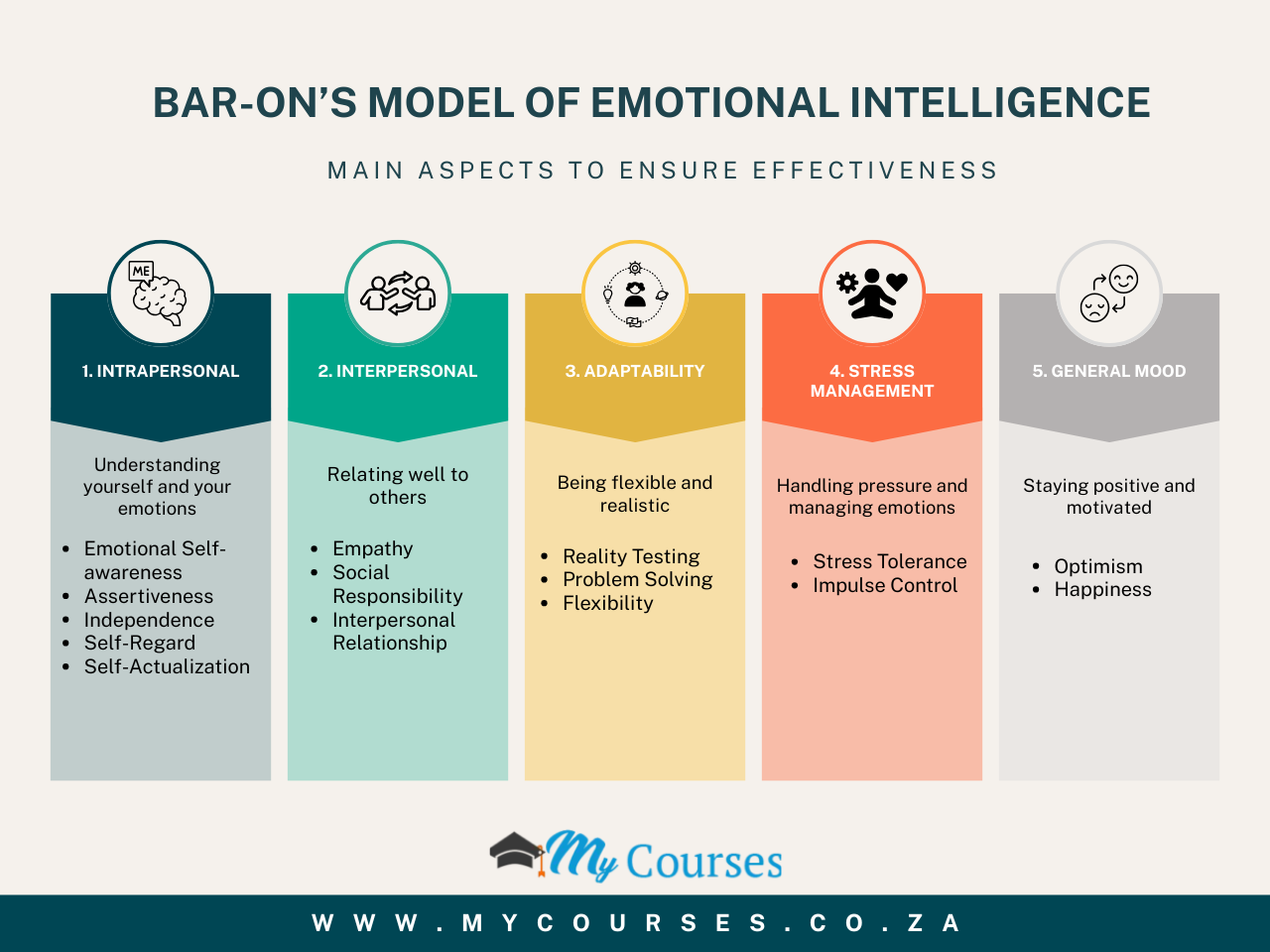
By Bar-On’s model, we are referring to a framework created by psychologist Reuven Bar-On, which explains how emotional and social skills help people understand themselves, build relationships, and handle everyday problems. This model includes five main areas, and one of them is called Interpersonal Skills – where Empathy plays a big role.
To give you a quick overview, here is how Bar-On’s model is organised into key areas of emotional intelligence:
- Intrapersonal Skills: Understanding yourself, your emotions, and your strengths.
- Interpersonal Skills: Building healthy relationships and being aware of others’ feelings.
- Stress Management: Dealing with stress and controlling your emotions.
- Adaptability: Being flexible and solving problems when things change.
- General Mood: Staying positive and motivated in everyday life.
What does the Domain of Empathy Refer to?
The main purpose of the Empathy domain in Bar-On’s model is to understand and feel what someone else is going through. It is not just about being nice – it is about recognising other people’s emotions and showing that you care in a real, respectful way.
The meaning of Empathy in this model can be broken down into these 4 key points:
1. Understanding Feelings Without Words
Empathy means being able to “read” someone else’s emotions even if they do not say anything. You can tell when a friend is sad, angry, or upset just by looking at their face or hearing their tone of voice.
Example:
If your friend says “I’m fine” but looks down and avoids eye contact, someone with strong empathy will notice that something is wrong and ask how they can help.
2. Showing Care and Concern
Empathy is not only noticing feelings, but also caring about them. It involves showing kindness, offering help, or just listening when someone needs to talk.
Example:
When a classmate fails a test and feels discouraged, an empathetic person might say, “I know it sucks. You worked hard. Want to study together next time?”
3. Respecting Different Experiences
People with empathy do not judge others quickly. They understand that everyone has different backgrounds, struggles, and emotions. Empathy teaches you to be open-minded and respectful, even if someone is very different from you.
Example:
If a new student from another country seems quiet and distant, an empathetic learner might try to include them and make them feel welcome without pressuring them to speak right away.
4. Building Stronger Relationships
Empathy helps you become a better friend, sibling, or classmate. When you understand and respond to people’s emotions, you build trust and make others feel safe around you.
Example:
In group projects or sports, empathy helps you notice when someone feels left out or stressed, and you can step in to support them.
So, when Bar-On’s model talks about the Empathy domain, it is really talking about how well you understand others’ feelings and how you respond in a caring and helpful way. It is one of the most important parts of emotional intelligence, especially when it comes to working with people, solving conflicts, and creating supportive communities.
Get Free Help for Your Assignment Today
Click the Button Below: