On this page, we help students to answer the following question: “Differentiate between fair discrimination and unfair discrimination.” This is for Life Orientation Grade 12 Term 1 Source-Based Task 2026.
Quick Answer
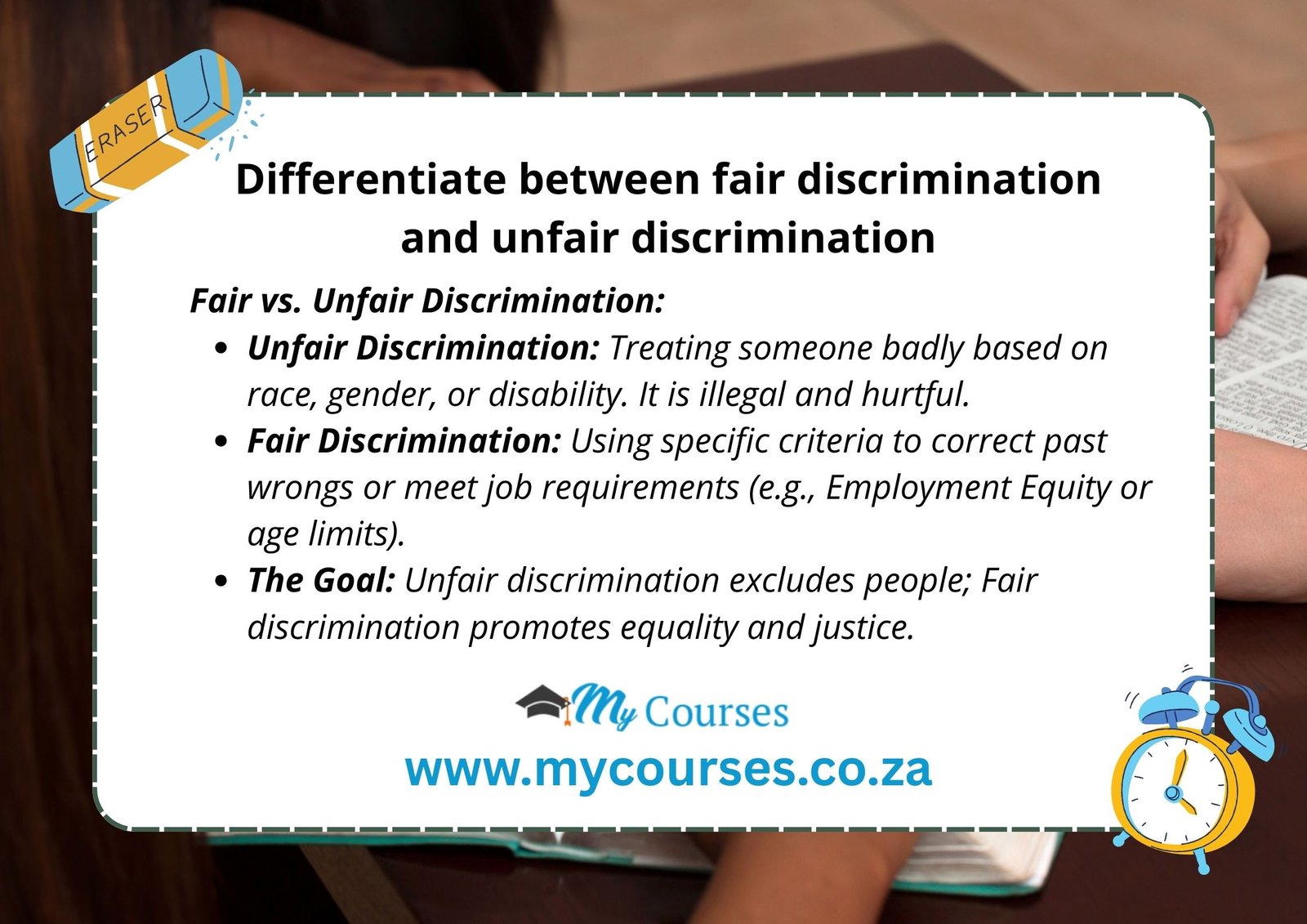
Fair vs. Unfair Discrimination:
- Unfair Discrimination: Treating someone badly based on race, gender, or disability. It is illegal and hurtful.
- Fair Discrimination: Using specific criteria to correct past wrongs or meet job requirements (e.g., Employment Equity or age limits).
- The Goal: Unfair discrimination excludes people; Fair discrimination promotes equality and justice.
Full Answer: Differentiating Between Fair and Unfair Discrimination
In the South African legal and social framework, “discrimination” is not always a negative term. Understanding the difference between fair and unfair practices is essential for protecting human rights and ensuring justice in the workplace and society.
1. Understanding Unfair Discrimination
Unfair discrimination occurs when someone is treated differently or less favourably based on personal characteristics that they cannot change or that are protected by the Constitution.
- It includes prejudice based on race, gender, pregnancy, marital status, ethnic or social origin, colour, sexual orientation, age, disability, religion, conscience, belief, culture, language, and birth.+1
- This practice undermines trust and efficiency within organisations.
- It often results in interpersonal conflict and can lead to detrimental relationships in professional and personal spaces.
2. Defining Fair Discrimination
Fair discrimination is the legal and intentional act of treating people differently to achieve a specific, justified goal, such as correcting historical imbalances or meeting inherent job requirements.
- Affirmative Action: This is a form of fair discrimination designed to ensure that people from previously disadvantaged groups have equal opportunities in career decision making and employment.
- Inherent Requirements of a Job: For example, a school can insist on hiring a qualified teacher over an unqualified one. This is “discriminating” based on skill, which is considered fair.
- Age Limits: Certain admission requirements for specific health or safety-related roles may have age restrictions, which is a justified form of fair discrimination.
3. Comparison of Key Differences
| Feature | Unfair Discrimination | Fair Discrimination |
| Legal Status | Illegal under the Constitution. | Legal and often required by law. |
| Intent | To exclude, hurt, or marginalise a person. | To include, correct, or meet a standard. |
| Basis | Based on prejudice or stereotypes. | Based on merit, safety, or equity laws. |
| Outcome | Creates social stress and inequality. | Promotes diversity and fairness. |
4. Impact on Moral Conduct and Society
Accepting unfair discrimination as normal can negatively affect the moral conduct of young people. It is important for students to express their views appropriately to challenge unfairness while respecting the policies that promote true equality.
Reference for Students:
- Subject: Life Orientation Grade 12
- Textbook: Focus Life Orientation Grade 12 +1
- Chapter: Chapter 2: Democracy and Human Rights / Chapter 5: Careers and Career Choices
- Topic: Human rights, equality, and ethical practices in society
Get Free Help for Your Assignment Today
Click the Button Below: