On this page, we help students to answer the following question: “Discuss the possible negative impact that avoiding conflict may have on a matric learner’s emotional well-being.” This is for Life Orientation Grade 12 Term 1 Source-Based Task 2026.
Quick Answer
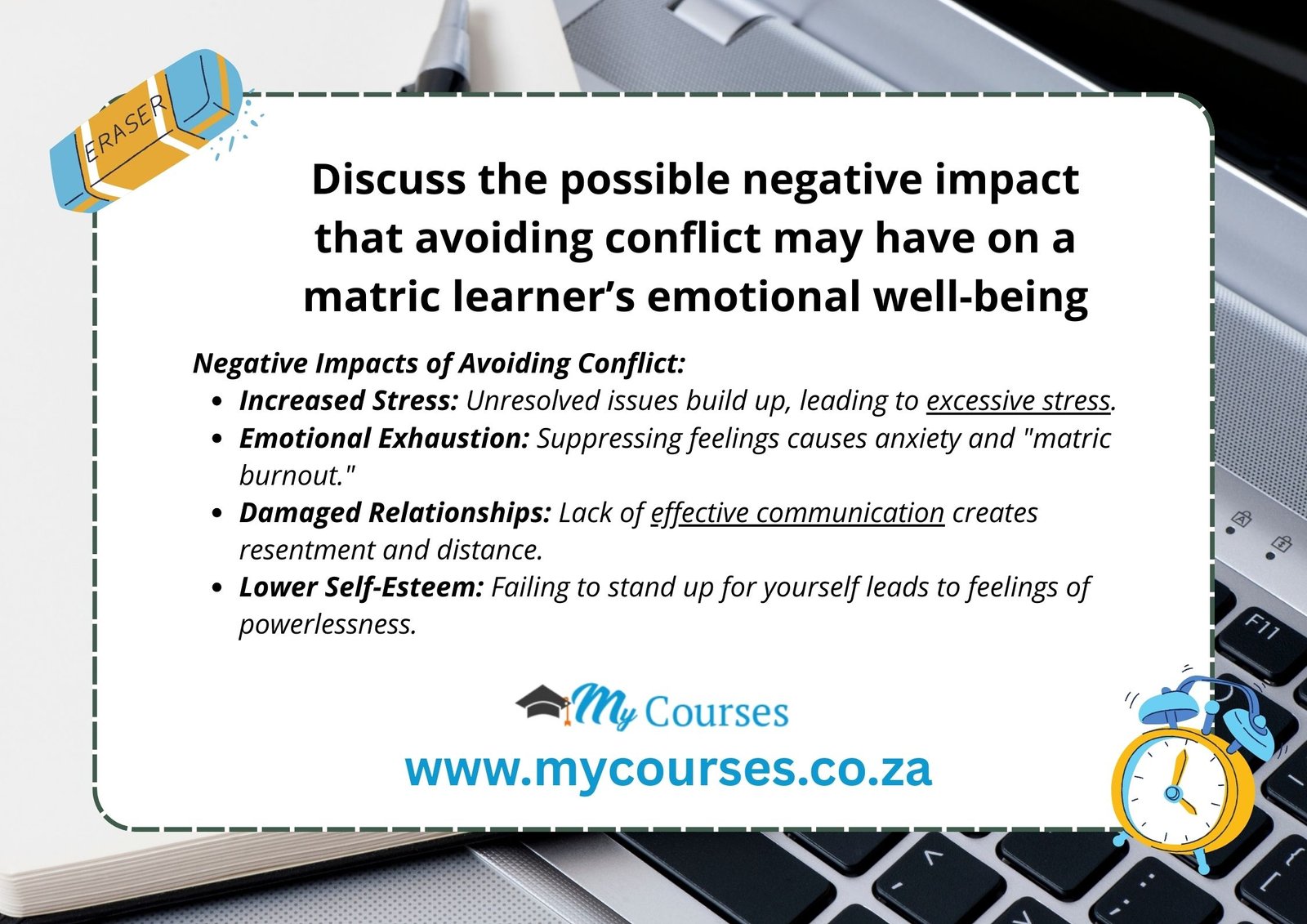
Negative Impacts of Avoiding Conflict:
- Increased Stress: Unresolved issues build up, leading toexcessive stress.
- Emotional Exhaustion: Suppressing feelings causes anxiety and “matric burnout.”
- Damaged Relationships: Lack ofeffective communicationcreates resentment and distance.
- Lower Self-Esteem: Failing to stand up for yourself leads to feelings of powerlessness.
Full Answer: The Impact of Conflict Avoidance on Emotional Well-being
Many matriculants believe that by avoiding conflict, they are making their lives easier and focusing more on their NSC exam preparation. However, the South African Life Orientation curriculum highlights that suppressing interpersonal or intrapersonal conflict can have severe consequences for a learner’s mental health .
1. Accumulation of Excessive Stress and Anxiety
Conflict does not simply disappear because it is ignored. Instead, unresolved issues tend to linger and grow.
- For a matriculant, this creates a constant “background noise” of worry that contributes to signs and symptoms of stress.
- This stress can interfere with concentration, making it harder to stay focused during an examination.+1
2. Erosion of Self-Confidence and Identity
Avoiding conflict often means a learner is not expressing their true values or emotions.+1
- Constantly giving in to peer pressure to avoid an argument results in a loss of personal autonomy.
- This leads to intrapersonal conflict, where the learner feels unhappy with themselves, ultimately damaging their quality of life and self-worth.+2
3. Strained Interpersonal Relationships
Healthy relationships require effective communication to resolve differences.
- When a learner avoids addressing a problem with a peer or teacher, resentment builds up.
- This can lead to detrimental relationships where the learner feels isolated or misunderstood, removing the vital support system needed during the transition between school and post-school destinations.+1
4. Development of Poor Coping Mechanisms
Learners who avoid conflict often fail to develop effective coping mechanisms to manage stress .
- Instead of learning conflict resolution skills, they may turn to procrastination or other unhealthy habits to escape their feelings .
- Learning to express views in an appropriate manner is a vital life skill that helps maintain emotional balance during the high-stakes matric year.
Reference for Students:
- Subject: Life Orientation Grade 12
- Textbook: Focus Life Orientation Grade 12
- Chapter: Chapter 1: Development of the Self in Society (Unit 2: Conflict Resolution)
- Page/Section: Section A, Question 4
Get Free Help for Your Assignment Today
Click the Button Below: