Quick Answer
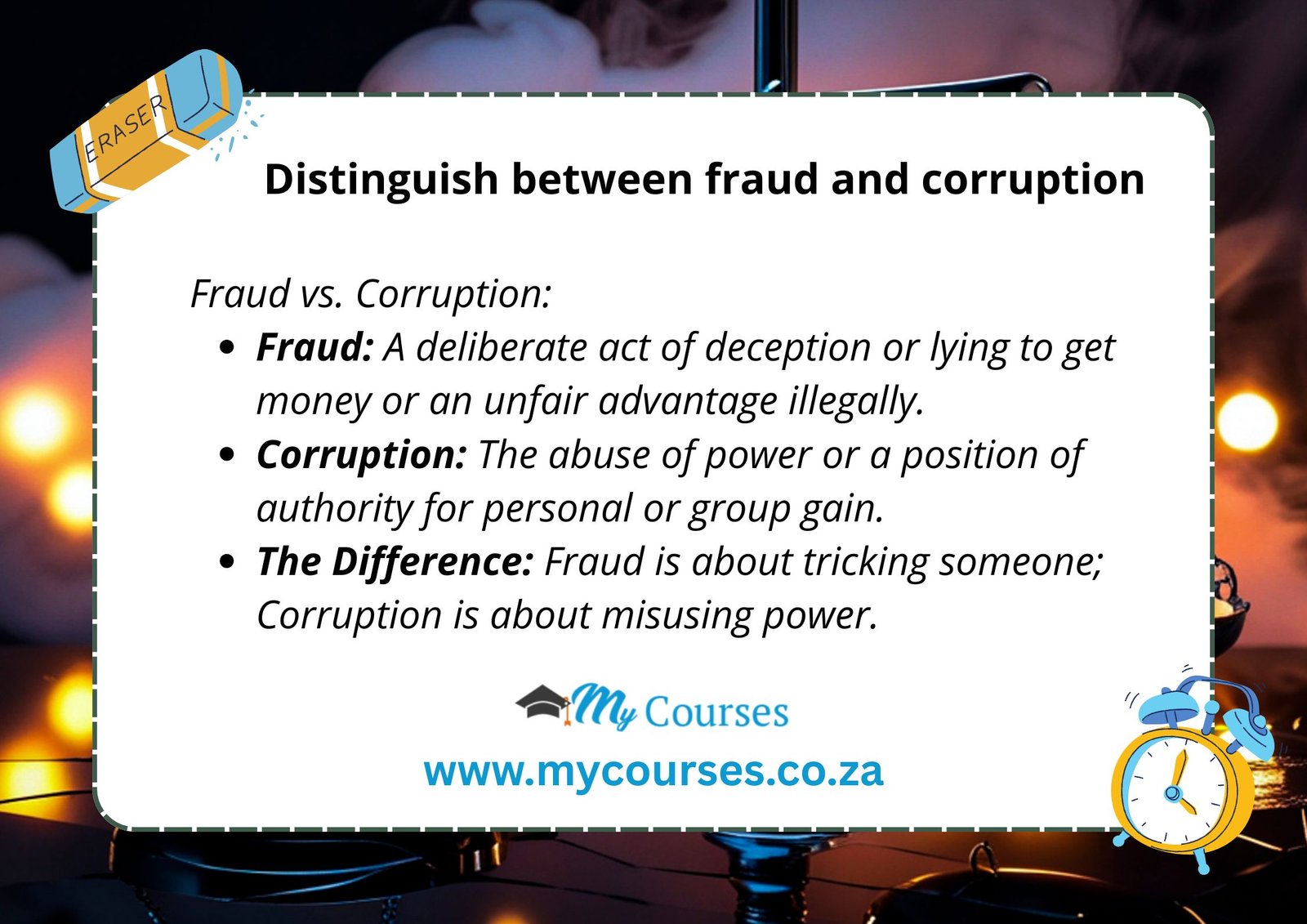
Fraud vs. Corruption: * Fraud: A deliberate act of deception or lying to get money or an unfair advantage illegally. * Corruption: The abuse of power or a position of authority for personal or group gain.+1
- The Difference: Fraud is about tricking someone; Corruption is about misusing power.
Full Answer: Distinguishing Between Fraud and Corruption
In Life Orientation, understanding the legal and ethical differences between fraud and corruption is essential for career decision making and maintaining moral conduct. While both are unethical and illegal, they operate through different mechanisms.
1. Defining Corruption: The Abuse of Power
Corruption generally involves the abuse of entrusted power for personal or group gain. It occurs when someone in a position of authority—whether in a government or private institution—uses that influence to benefit themselves or their associates . Common forms of corruption include:+1
- Bribery: Offering or receiving rewards to influence an official’s actions.+2
- Nepotism: Giving jobs or favors to family members regardless of merit.+2
- Cronyism: Appointing friends or political allies to positions of power.+2
2. Defining Fraud: Deliberate Deception
Fraud is usually a deliberate act of deception intended to secure an unfair or unlawful advantage. Unlike corruption, which requires a position of power to “abuse,” fraud can be committed by anyone who lies or misrepresents the truth for financial gain. Examples of fraud include:
- Embezzlement: Stealing money that was placed in your care or belonging to your employer.+1
- Identity Theft: Using someone else’s details to access their funds.
- Falsifying Qualifications: Lying about a degree to meet admission requirements.
3. How They Interact in Society
While distinct, these two concepts are often linked. For instance, a government official might commit fraud by creating “ghost employees” (deception) and use their corruption (abuse of power) to ensure those payments are processed without being questioned. Both practices undermine trust and efficiency within organisations and the broader society.+3
Reference for Students:
- Subject: Life Orientation Grade 12
- Textbook: Focus Life Orientation Grade 12
- Chapter: Chapter 5: Careers and Career Choices
- Topic: Related concepts of fraud and corruption.
Get Free Help for Your Assignment Today
Click the Button Below: