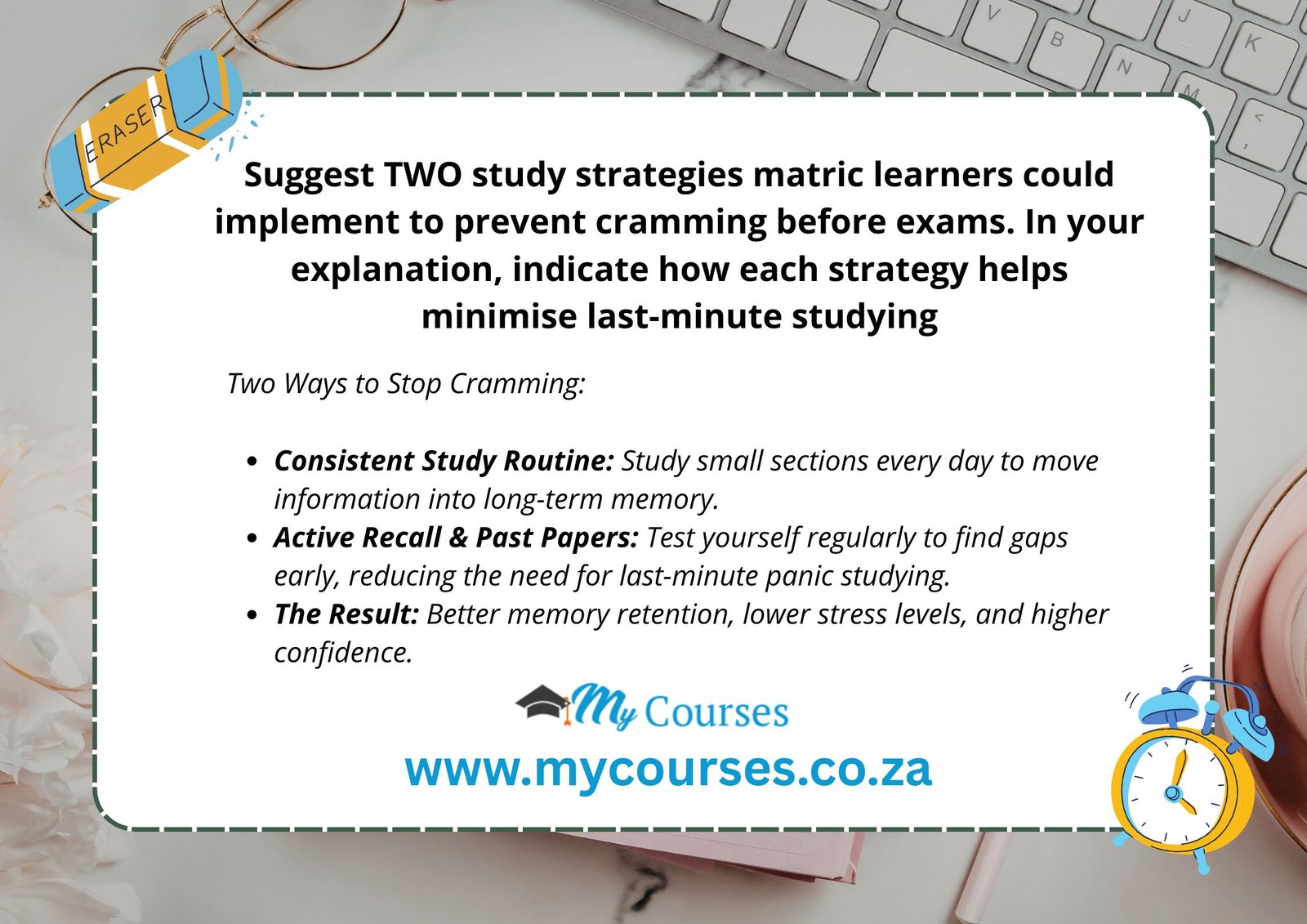
Suggest TWO study strategies matric learners could implement to prevent cramming before exams:
Quick Answer
Two Ways to Stop Cramming:
- Consistent Study Routine: Study small sections every day to move information into long-term memory.
- Active Recall & Past Papers: Test yourself regularly to find gaps early, reducing the need for last-minute panic studying.
- The Result: Better memory retention, lower stress levels, and higher confidence.
Full Answer: Effective Study Strategies to Prevent Cramming
Cramming—or last-minute “panic” studying—is a common challenge that increases signs and symptoms of stress and reduces how much information you actually remember . To optimise preparation for the NSC exams, learners should move away from procrastination and adopt structured routines.+2
1. Implementing a Consistent Study Routine
A consistent study routine involves setting aside specific times each day to review work rather than waiting until the week of the exam.+1
- How it minimises last-minute studying: By spreading out the workload (distributed practice), the brain has time to move information from short-term to long-term memory. This prevents the “overload” that happens when you try to learn a whole term’s work in one night. It also helps in managing stress by making the volume of work feel manageable .
2. Using Active Recall and Practice Questions
Active recall involves testing yourself on the material (using flashcards or past papers) instead of just re-reading notes .
- How it minimises last-minute studying: Practice questions help learners identify “problem areas” early on. When you know exactly what you don’t understand weeks before the exam, you can focus on those specific gaps. This removes the need for desperate, last-minute cramming because you have already mastered the difficult concepts through consistent testing.+2
Reference for Students:
- Subject: Life Orientation Grade 12
- Textbook: Focus Life Orientation Grade 12
- Chapter: Chapter 3: Study Skills
- Topic: Effective Study and Exam Preparation.
Get Free Help for Your Assignment Today
Click the Button Below: