On this page, we help students to answer the following question: “What is intrapersonal conflict?” This is for Life Orientation Grade 12 Term 1 Source-Based Task 2026.
Quick Answer
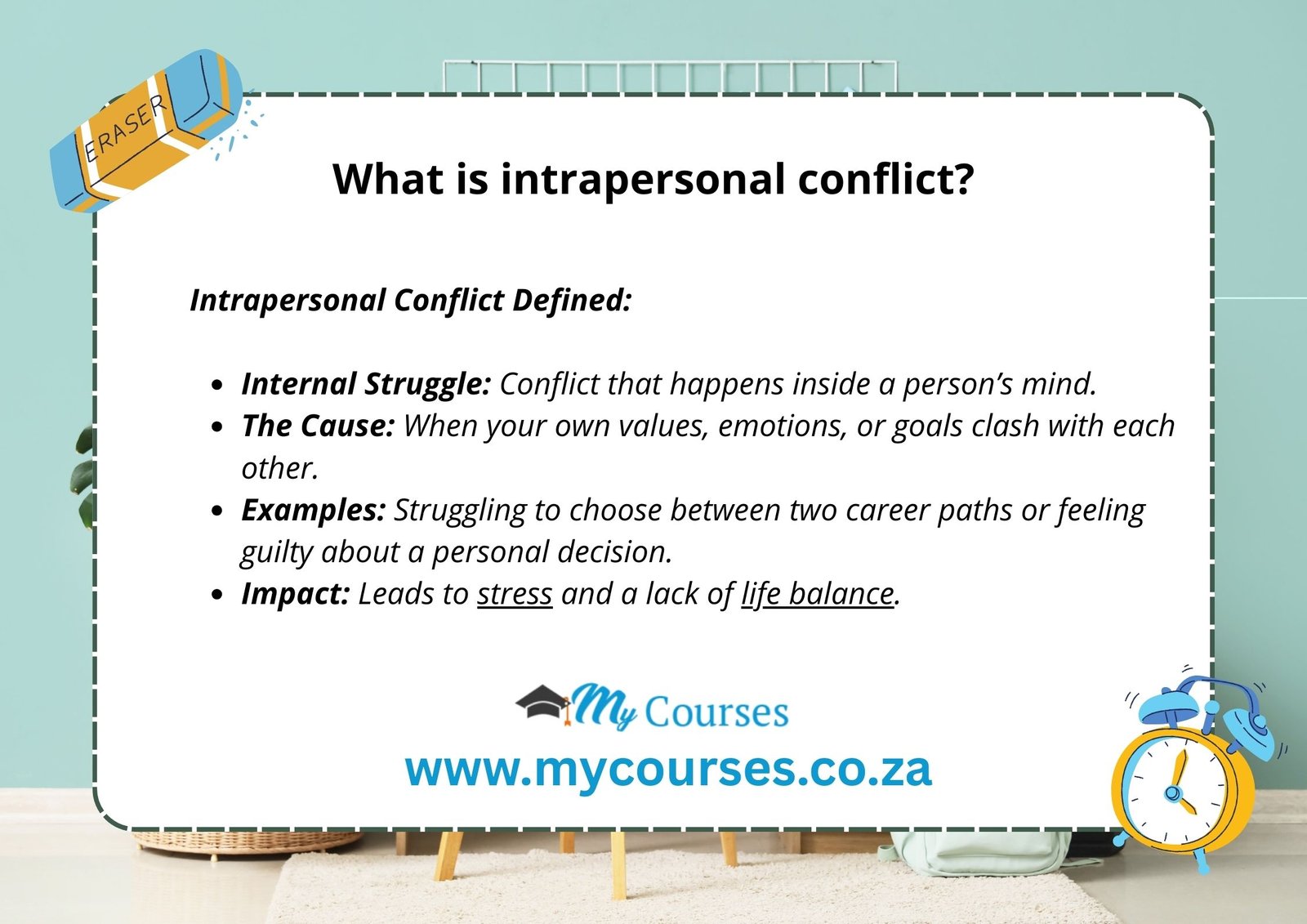
Intrapersonal Conflict Defined: * Internal Struggle: Conflict that happens inside a person’s mind. * The Cause: When your own values, emotions, or goals clash with each other. * Examples: Struggling to choose between two career paths or feeling guilty about a personal decision. * Impact: Leads to stress and a lack of life balance.+2
Full Answer: Understanding Intrapersonal Conflict in Life Orientation
In the Grade 12 Life Orientation curriculum, it is vital to distinguish between external and internal struggles. While we often focus on arguments with others, intrapersonal conflict refers to the psychological struggle occurring within an individual’s own mind.+1
1. The Core of Internal Struggle
Intrapersonal conflict arises when a learner faces a dilemma involving their own decisions, emotions, or values.+1
- For a matriculant, this might involve a clash between the desire to socialise and the responsibility to study.+2
- It often involves “competing” inner voices, such as wanting to follow a passion versus choosing a career based on admission requirements and financial stability.+2
2. Common Causes for Matric Learners
The transition into the “exit grade” provides several triggers for intrapersonal conflict:
- Career Pathing: Struggling with career decision making when personal interests clash with parental expectations.+2
- Financial Values: Feeling torn between the need for financial independence and the reality of current economic limitations.+1
- Moral Conduct: Experiencing guilt or confusion when accepting corruption as normal conflicts with one’s personal integrity.+1
3. The Impact on Emotional Well-being
If left unresolved, intrapersonal conflict can severely impact a learner’s quality of life.
- It is a primary source of excessive stress, leading to anxiety and a lack of focus.+1
- Many learners try to avoid these conflicts, but this only increases uncertainty and long-term stress levels.
4. Resolution Strategies
Solving internal conflict requires effective coping mechanisms:
- Self-Reflection: Using goal setting to align actions with personal values.+1
- Seeking Advice: Talking to a mentor to gain perspective on career options.
- Time Management: Creating a structured approach to studying to reduce the internal panic caused by cramming.+1
Reference for Students:
- Subject: Life Orientation Grade 12
- Textbook: Focus Life Orientation Grade 12
- Chapter: Chapter 1: Development of the Self in Society
- Topic: Intrapersonal conflict and internal decision-making.
Get Free Help for Your Assignment Today
Click the Button Below: