On this page, we help students to answer the following question: “Differentiate between discrimination and gender inequality.” This is for Life Orientation Grade 12 Term 1 Source-Based Task 2026.
Quick Answer
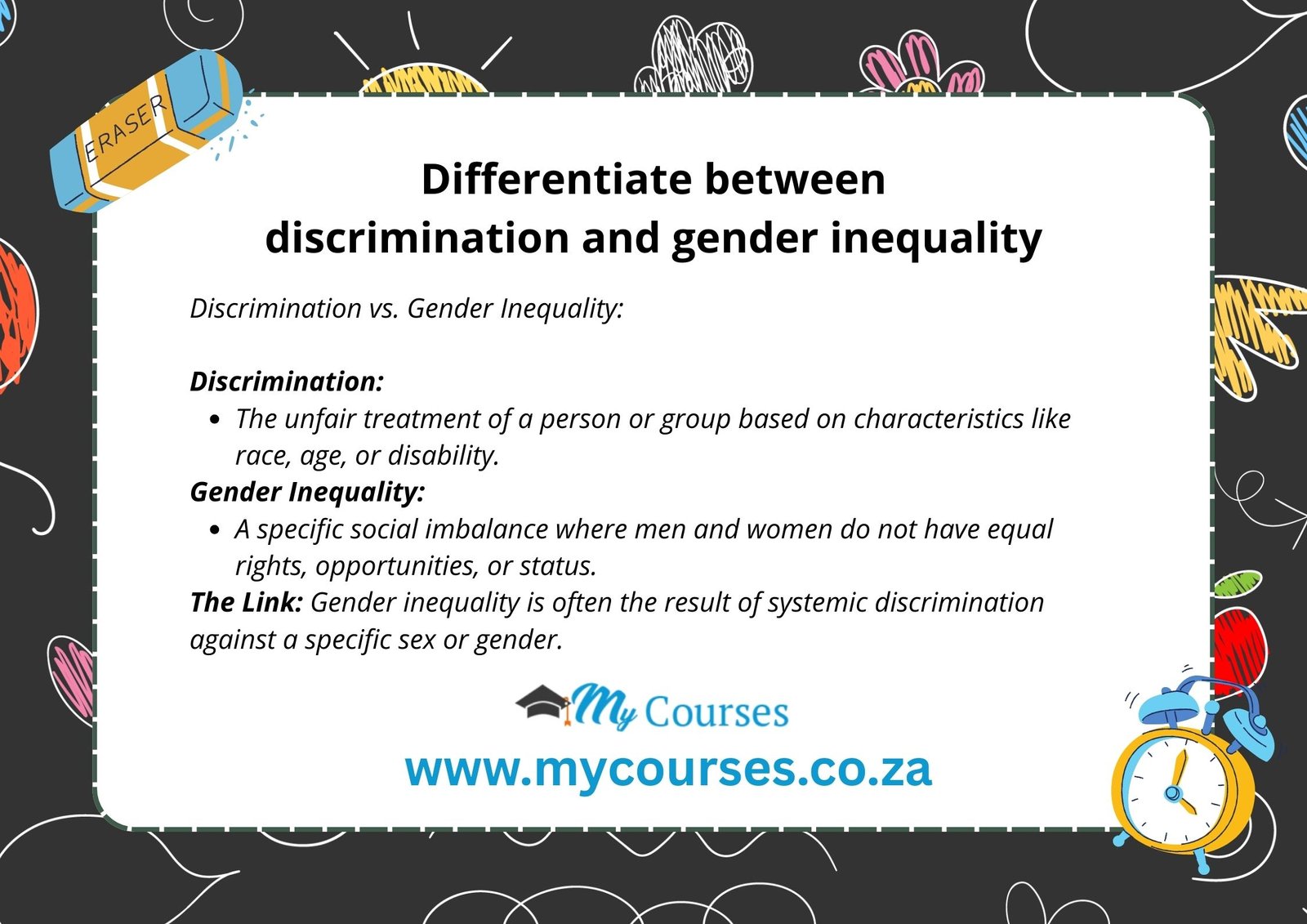
Discrimination vs. Gender Inequality:
- Discrimination: The unfair treatment of a person or group based on characteristics like race, age, or disability.
- Gender Inequality: A specific social imbalance where men and women do not have equal rights, opportunities, or status.
- The Link: Gender inequality is often the result of systemic discrimination against a specific sex or gender.
Full Answer: Differentiating Between Discrimination and Gender Inequality
Understanding the distinction between these two concepts is vital for upholding human rights and promoting a fair society in South Africa. While they overlap, they refer to different scopes of social injustice.
1. What is Discrimination?
Discrimination is the broader term used to describe the unfair treatment of individuals or groups based on specific grounds such as race, religion, disability, or sexual orientation.
- It can be unfair, where someone is prejudiced against for no valid reason, or fair, such as implementing affirmative action to correct past imbalances .
- Discrimination creates interpersonal conflict and acts as a major source of social stress for learners.
2. What is Gender Inequality?
Gender inequality is a specific form of social disparity where people are treated differently solely based on their gender.
- It manifests as an imbalance of power relations, where one gender (typically men) is granted more authority, higher pay, or better opportunities than another.
- Gender inequality is often rooted in media-driven beliefs and traditional stereotypes that dictate how men and women “should” behave .
3. Key Differences at a Glance
| Feature | Discrimination | Gender Inequality |
| Scope | Broad: includes race, age, disability, etc. | Specific: focused on gender/sex. |
| Grounds | Based on any protected characteristic. | Based specifically on being male, female, or non-binary. |
| Example | Refusing to hire someone because they are “too old.” | Paying a woman less than a man for the same job. |
4. The Impact on Students
Both issues can lead to detrimental relationships and negatively affect a learner’s quality of life. For example, gender inequality can lead to power relations that result in teenage pregnancy when one partner has more control than the other. Facing either of these challenges requires strong coping mechanisms to maintain focus during NSC exam preparation.
Reference for Students:
- Subject: Life Orientation Grade 12
- Textbook: Focus Life Orientation Grade 12
- Chapter: Chapter 2: Democracy and Human Rights / Chapter 4: Relationships
- Topic: Human rights violations and gender-based issues.
Get Free Help for Your Assignment Today
Click the Button Below: