On this page, we help students to answer the following question: “Explain THREE innovative strategies that a matric learner could apply to achieve financial independence while still at school.” This is for Life Orientation Grade 12 Term 1 Source-Based Task 2026.
Quick Answer
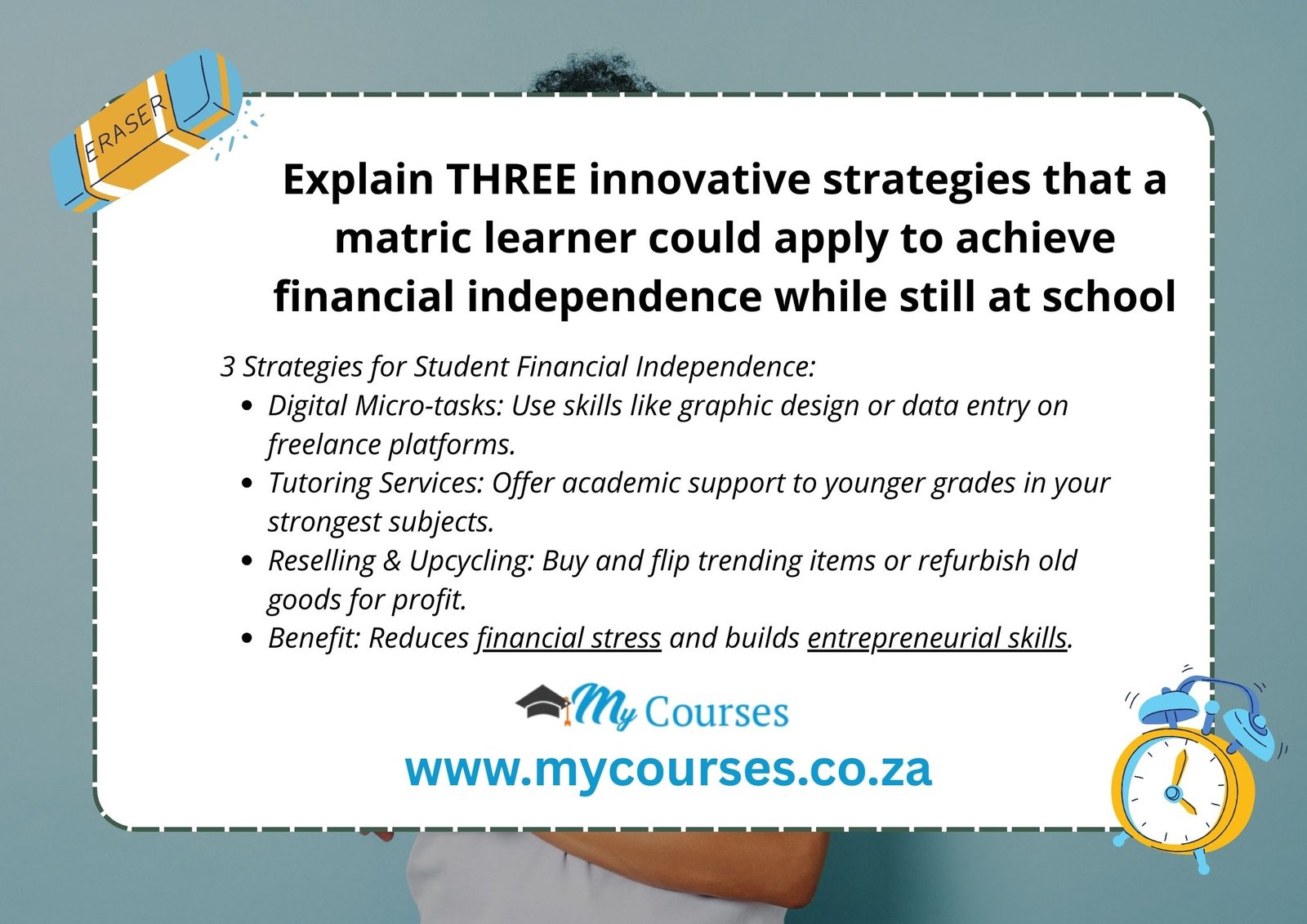
3 Strategies for Student Financial Independence:
- Digital Freelancing: Use skills like graphic design or social media management on freelance platforms.
- Peer Tutoring: Monetise your strongest subjects by helping younger learners improve their grades.
- Niche Entrepreneurship: Start a small-scale business, such as upcycling clothes or reselling tech.
- Benefit: Reducesfinancial stressand builds a professionalcareer portfolio.
Full Answer: Innovative Strategies for Financial Independence at School
Achieving financial independence while in matric is not just about earning money; it is about reducing the financial decisions that cause pressure at home and preparing for the costs of tertiary education.+1
1. Monetising Digital and Creative Skills
Modern matriculants often possess high-level digital skills that are in demand.
- Learners can offer services such as content creation, basic web design, or administrative support to local businesses.+1
- Using platforms like LinkedIn or Behance to showcase work acts as an early career portfolio, making the learner more employable during the transition to post-school destinations.
- This strategy allows for flexible study routines, ensuring that income generation does not lead to procrastination.
2. Academic Peer Tutoring Services
High-performing learners can leverage their academic success to help others while earning an income.
- Tutoring younger grades in subjects like Mathematics or Physical Science reinforces the tutor’s own study methods .
- This builds leadership and communication skills, which are valuable for a professional career portfolio.
- It reduces intrapersonal conflict regarding future financial stability by building a savings buffer for university.+1
3. Niche Entrepreneurship and “Upcycling”
Starting a small-scale business based on current trends can provide steady cash flow without requiring massive start-up capital.
- Learners can engage in “upcycling” (refurbishing second-hand clothes or electronics) and reselling them for a profit.+1
- This approach requires researching appropriate funding options or initial small savings, teaching vital career decision-making skills early on.+1
- Managing a small business helps a learner develop time management, which is an important skill for the exit grade .+1
Reference for Students:
- Subject: Life Orientation Grade 12
- Textbook: Focus Life Orientation Grade 12
- Chapter: Chapter 5: Careers and Career Choices
- Topic: Innovative strategies for financial independence
Get Free Help for Your Assignment Today
Click the Button Below: